When people watch a HIAB lift, their eyes usually follow the load as it rises off the lorry. What they often miss is the quiet teamwork happening around it. On many jobs our driver works alongside a slinger, and the way those two people communicate is what makes a lift calm, controlled and safe. As the autumn days shorten and sites get busier, that teamwork matters more than ever.
What the slinger does
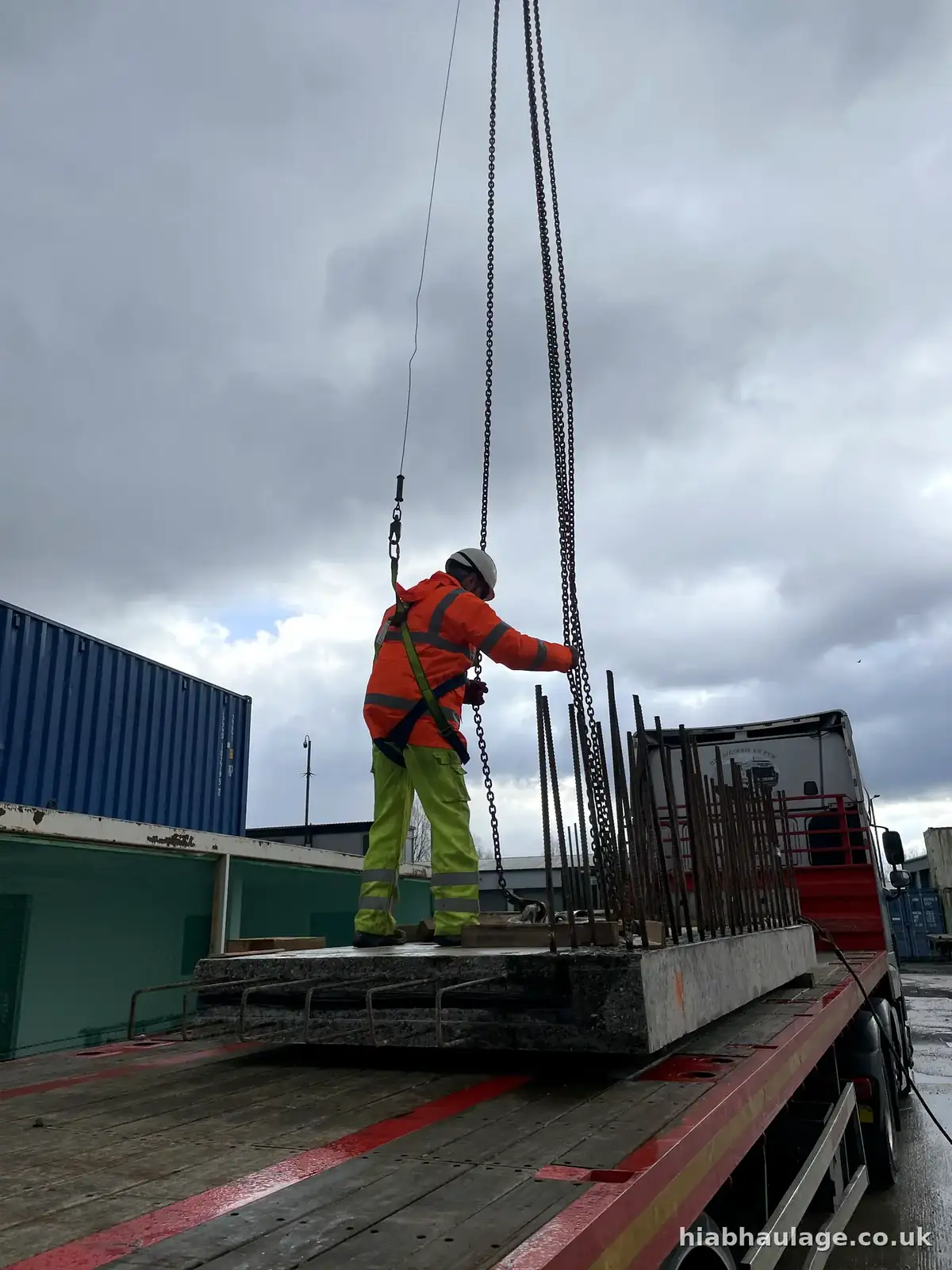
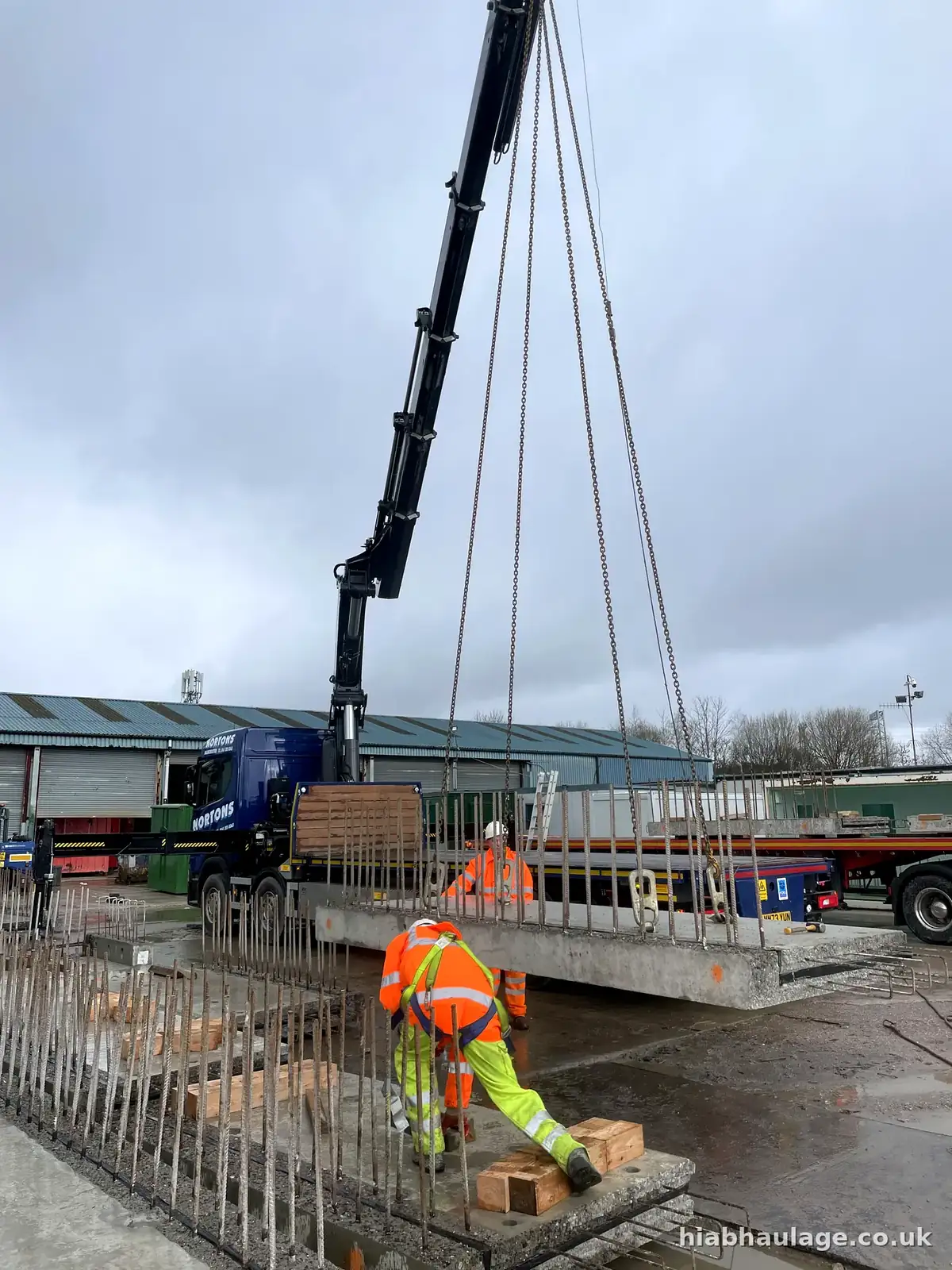
The slinger is responsible for rigging the load. That means choosing the right chains, straps or lifting gear, checking them, and attaching them to the correct lifting points so the load hangs level. They make sure nothing loose is left on top and that the load is balanced before it moves.
Once the load is rigged, the slinger becomes the driver's eyes at the point of set down. They stand where they can see both the load and the landing spot, and they guide each movement until it is in place.
What the driver does
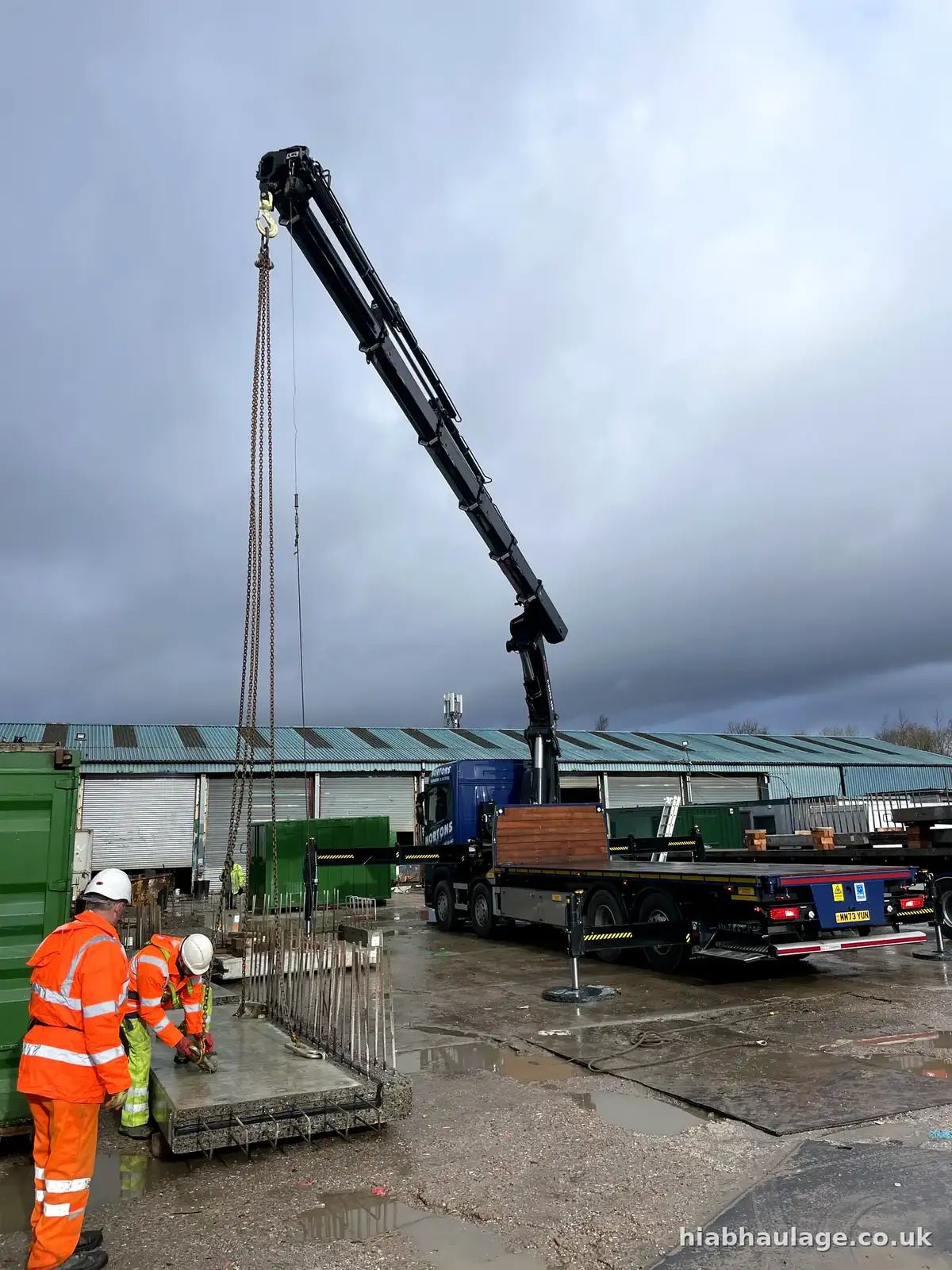
Our driver sets up the HIAB lorry, positions the stabiliser legs on firm ground and works the controls of the lorry mounted lifting arm. From the controls, they cannot always see every corner of the load or the spot it is heading to, which is exactly why the slinger is there.
The driver lifts smoothly and steadily, following the signals they are given. Our drivers are ALLMI trained, and there is more about the team and how we work on our team behind Hiab Haulage.
Signals, radios and a shared plan
Before the lift starts, the driver and slinger agree how they will communicate. On a quiet site that might be clear hand signals. On a noisy or busy site, or where the load goes out of sight, they may use radios. Either way, both know the plan before anything leaves the bed of the lorry.
That plan is made before the vehicle is booked. We ask about the load, the site and the set down point, and the driver and slinger arrive knowing what the lift involves. On the day, their job is to carry out that plan carefully and keep everyone around them informed. Before lifting, the crew walks the lift area with your site manager so everyone knows where to stand and when the load will move.
Why it matters to you
For the customer, good teamwork means precast panels, slabs, cabins and machinery land exactly where they should, square and undamaged. It also means a tidy, professional presence on your site, with the lift area kept clear and everyone knowing what is happening.
If you would like to see the kind of work this teamwork supports, take a look at our full range of HIAB services. When you are ready, email us or send us your job through the quote form and we will plan your lift.